

I’m currently undertaking a Postgraduate Certificate in Equine Assisted Therapy with Ulster University, which I may extend to a Masters in Advancing Practice if funding allows.
This course has been an incredible opportunity to combine my long-standing interests in movement, the human–equine relationship, and therapeutic practice. It brings together everything I love — horses, science, and the art of helping people move and feel better.
Module One: The Equine and the Therapeutic Environment
The first half of the year focussed entirely on the equine — their psychology, welfare, behaviour, and environment — all examined through a clinical, evidence-based lens.
We explored:
Equine psychology, stress responses and welfare considerations
The “social licence” and ethical responsibility of using horses in therapy
Training, husbandry, and sensory-informed approaches to handling and environment
Risk assessment, legislation, and professional responsibility
The biomechanics and movement of the equine, and how that movement influences the human
This was a deep, immersive exploration into how the equine environment can shape human experience — physically, emotionally, and even neurologically.
As someone who has worked with horse riders for almost ten years, and been fascinated by biomechanics since my teens, it was the perfect bridge between my physiotherapy background and my passion for equine movement.
My Case Study Pony — Danny
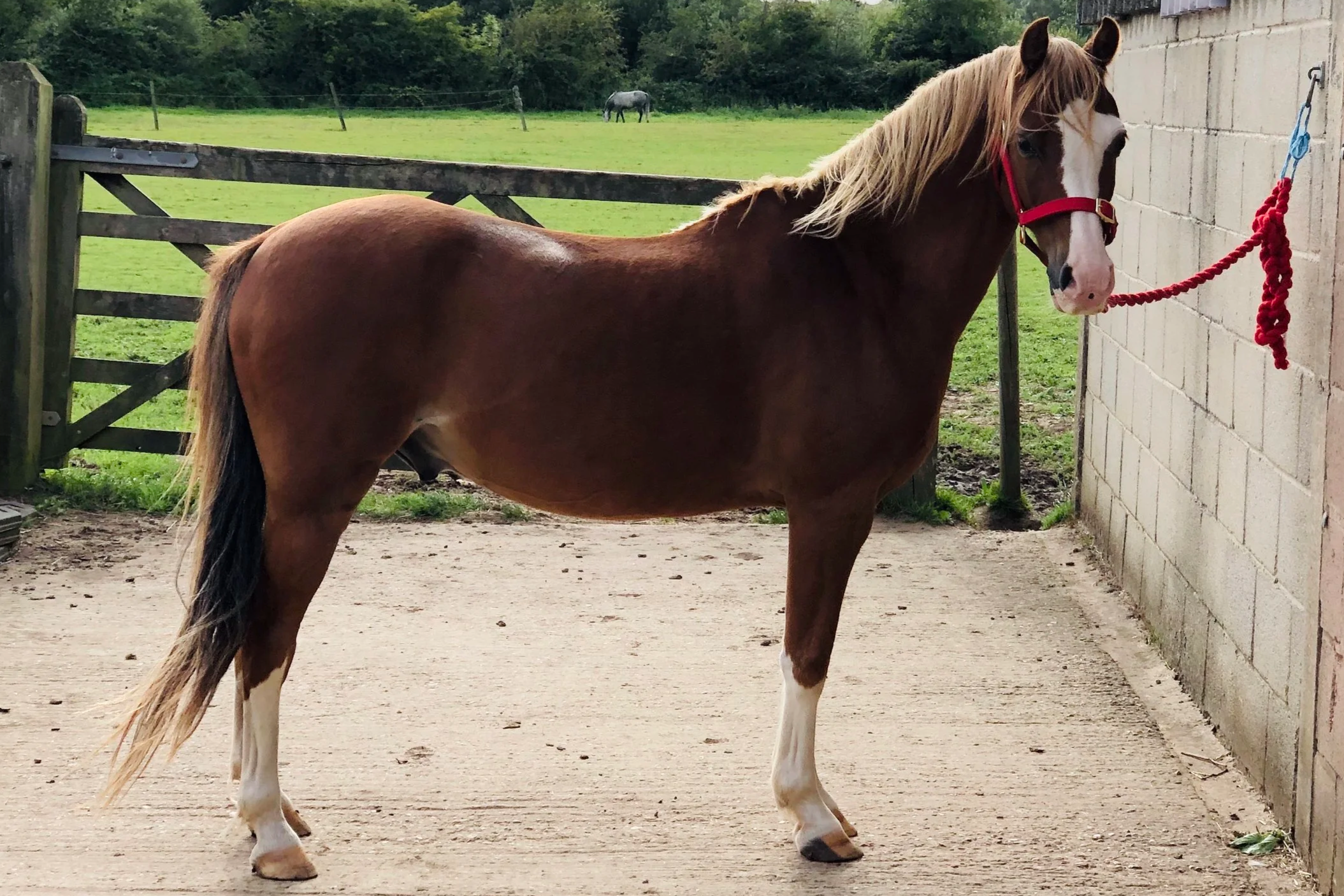
Hilin Daniel
For my first assignment, I assessed our lovely 24-year-old pony, Danny.
Danny is fully retired now, with some age-related asymmetries from arthritis and dental issues, but still the most curious, kind-hearted soul.
As a younger pony, he would have been an ideal hippotherapy pony — with a wonderfully flat back (perfect for supporting small riders in different positions) and a calm, inquisitive nature. Unfortunately he has asymmetries in movement that would limit any therapeutic benefit for the client and from a welfare perspective, whilst he does not show any pain related behaviours during the assessment, it is unfair to expect him to carry such a physical workload at his age with his biomechanics.
Through assessment, it became clear that at his age he would now be best suited to therapeutic groundwork — a role that honours his fabulous temperament while accommodating his physical changes.
It was such a valuable, eye-opening process — and I’m thrilled to say I was awarded a Distinction for my case study presentation.
Module Two: Clinical Practice in Equine Assisted Therapy
The second module, which I’m currently completing, is where theory meets clinical application.
Many of my fellow students are paediatric neurological or developmental physiotherapists and occupational therapists. Their work focuses on sensory processing, emotional regulation, and movement development in children.
For me, the challenge — and the joy — has been applying these same principles to my adult musculoskeletal clients. It’s adding a completely new dimension to how I understand chronic pain, regulation, posture, and the interaction between body and environment.
My training with Equipilates™, Andy Thomas, and Centaur Biomechanics has provided a strong foundation in rider biomechanics and horse–rider interaction. But this course flips the perspective beautifully: rather than exploring how the rider influences the horse, it examines how the therapeutic equine influences the human.
That subtle shift changes everything. It invites us to see the horse not just as a tool, but as an active, sentient therapeutic partner — one capable of co-regulation, emotional mirroring, and helping clients reconnect with their own movement and awareness.
It’s a perspective I find endlessly fascinating, and I can already see how it will inform my approach to physiotherapy, Pilates, and rider rehabilitation going forward.
In my next post, I’ll introduce you to my current case study participant — a friend and rider who is generously taking part in my module two project. We’re exploring the impact of equine-assisted therapy on pain, movement, and body awareness… and her progress so far has been truly inspiring.